An Interview with Historical Fiction Author – Helen Bryan

Tags

, , ,

The SisterhoodIf you’ve read War Brides, you will already have some sense of Helen Bryan‘s wonderful storytelling skills. Her latest novel is The Sisterhood and I’m delighted that she’s on the blog today talking about her writing. I’m also pleased to announce a two book giveaway of The Sisterhood. To qualify, please leave a comment either here or on my Facebook page.

You’ve written two novels and one biography. What draws you to historical events as the backdrop for your writing?     Aside from the fact history is so interesting, and often a case of truth being much stranger than fiction, it is a rich seam of inspiration for a writer, from cataclysmic events to quirky nuggets of stories. At the same time, it never fails to surprise me how people of different periods are the same- what I call the “human constant” factor. For thousands of years circumstances, and societal and economic pressures have changed, but the human experience, the hopes and fears, search for love, the  biological imperative, the lure of riches and power, the hunger for a spiritual dimension, remain very much the same.  Historical fiction authors put convincing flesh on real historical bones- rather like necromancers I often think.

Context is everything, which is why research is so important. Bridget Jones may have the same desire for love and happiness as a fetching bodice-ripper heroine of the eighteenth century. However, unlike Bridget Jones with her job, flat, boyfriends and chardonnay-fuelled angst, the eighteenth woman’s choices were usually circumscribed by a limited education and material dependence on men. Whether of an independent turn of mind, or more likely, obliged by circumstances to support herself, her employment opportunities were mostly at the lower end of the pecking order – servant, governess or prostitute. Were she to find true love, marriage (and economic support) in the arms of a lusty hero, she better hope he hadn’t perfected those bodice-ripping skills that left her swooning in the brothels. Venereal disease was rife at all levels of society and its treatment -with mercury -was just as likely to lead to disfigurement and death.  Failing that, the heroine faced a very real risk of dying in childbirth. Historical fiction’s happy endings, in their context, are often more precarious than they first appear, with the Angel of Death hovering in the background.

You studied law and worked as a barrister. How do these experiences inform your writing? Are you now writing fulltime?     I write full time, but my background in law has proved invaluable. It teaches a writer to be observant and nit picking about research and period detail and to focus on what is relevant. Also, lawyers are in the persuasion business.  As anyone familiar with courtroom drama will appreciate, presenting a case in court, particularly to a jury, involves putting together a kind of narrative to make evidence and the applicable law fit together. The more entertaining and convincing the narrative, the better the lawyer’s client’s chances are. Writers have to be similarly persuasive.

My late father, also a lawyer, always advised younger colleagues “Know your case well, and then always go over it one more time to see what you’ve missed.”  I still adhere to this piece of advice, rewriting and re-rewriting until the publisher’s deadline forces my hand.

Do you have a particular approach to research and writing?    Research is the easy part. In the main, this consists of burying myself in the British Library, to read about whatever period I plan to write about, and making notes by hand. While I can’t imagine writing on anything but a word processor, handwriting research notes tends to fix information in my brain, and significantly, at this stage the landscape of the novel starts to take shape.

Another good thing about research is that it’s possible to do it almost indefinitely without actually writing anything, while looking impressively busy. However, research isn’t limited to books. Useful information for a writer can crop up anytime, anywhere- newspaper stories, a snatch of conversation overheard in the street, a color, the weather, a landscape, any small detail that will pull a reader into the story. In particular, I am always on red alert for names. Characters must have exactly the right name, and only then do they begin to be real for me.  That’s when I begin writing, fitting them into that landscape.

As for writing itself, the first rule for any writer is the same- show up at the desk. Then write. I prefer to write in my study and I absolutely must begin writing first thing in the morning, having reluctantly woken up with the help of strong coffee known in my family as “mum’s rocket fuel”.

Have other writers of historical fiction or historical non-fiction influenced you and, if so, how have they influenced you?    An early introduction to historical fiction has undoubtedly been my greatest single influence, kicking open as it did the doors of imagination. I grew up in an extended family, with grandparents with houses and attics full of books and many cousins, where a reading child was a quiet child who was not actively getting into trouble and therefore viewed as a Good Thing. Nobody would have been unduly concerned even had they noticed I had bloodthirsty tastes, eschewing fairies and Disney stories for a dusty set of Victorian children’s books by an English historian and educator named Henty, who clearly felt that there was no need to spare any punches when writing for children. There was a particularly gripping volume of his about the French Revolution and the Reign of Terror, featuring a delightful family of aristocrats who met a gruesome end on the guillotine. The book gave me nightmares and might not pass the “responsible parent” test today, but Victorian parents- and mine -were made of sterner stuff. The important thing is, it really brought history and the people in it alive. And killed them of course.  I was hooked.

I was also a huge fan of classic comics.  A passing phase, but a usefully visual one, that introduced me to Don Quixote and Prince Valiant and Ivanhoe and from there it was but a short leap to Arthur Rackham’s beautiful illustrations in King Arthur and the Knights of the Round Table. The image of a hand in a jeweled sleeve reaching out of the lake to catch Excalibur when Arthur threw it in was the most romantically dramatic image I had so far encountered. I went through a medieval phase, devouring  TH White’s “Once and Future King”, puzzling over the romantic entanglements of Arthur and Guinevere and Lancelot and Morgan la Fey, before moving on to Anya Seton’s bodice-ripping “Katherine” and the Brontes. At fourteen I instinctively grasped that Heathcliffe was not the sort of person my mother would ever allow me to date, and was riveted by this first glimpse of a dark side that I could not yet comprehend.

Many years later history’s enchantments hold. In fiction, I am partial to Carlos Ruiz Zafon, Larry McMurtry, Charles Frazier, Mrs. Gaskell, Hilary Mantel and hundreds of others. In non fiction  Amanda Foreman’s satisfyingly lengthy and detailed “ World on Fire “the best book ever written on the American Civil War, and Giles Milton’s “Big Chief Elizabeth” pretty much brought life in my house to a standstill.  Happily, there’s always so much more!

How do you select new stories to tell?    Oddly, it often feels as if they select me. A story can begin anywhere- with a color, a time of day, a meal, a view, an event in history, the way a person walks, a character whose back-story I can immediately imagine. I tend to let my imagination roam. To non–authors this looks very much like staring aimlessly into space and doing nothing.

What ingredients do you think make for a successful historical fiction author? Do you deliberately plan for these ingredients in your writing?    A fairly obsessive and disciplined approach to research is necessary if historical fiction is to convince the reader. A writer must look at the world through a character’s eyes, and imagine “what happened next.”  I never exactly plan for this. If my stories are firmly rooted in the period they seem to develop their own dynamic. The only deliberate thing I do is concentrate on writing it.

What techniques do you employ to write productively?    Aside from  lots of coffee and beginning in the morning, I like to be left alone in my study, in what I call peace and quiet and my husband calls lockdown. I won’t answer the telephone or doorbell and turn ratty if someone breaks my train of thought. The bestselling author Nora Roberts famously told her family not to disturb her unless someone was bleeding or the house was on fire. She later amended this to arterial blood and actual flames. I would love a sofa cushion embroidered with her words.

What brand would you like to establish as a writer? How do you plan to reinforce that brand?    I never set out to establish any brand, save as a teller of stories. If I could chose a brand it would be something along the lines of “the thinking woman’s historical fiction” because I think it’s important to give the reader “value” in terms of something to think about when they finish the book.

What do you do to connect with readers?    Just write, mainly.  If someone reads it, that is a very real connection. In addition, I think it is terribly important never to underestimate your readers, so I try to write in such a way that readers feel that I am appealing to their intelligence and sensitivity. I don’t blog because I would be so carried away I would never get anything else done, but I do respond to all readers who contact me.

What do you know about your readers?    Generally, I would say they prize a good story, like a challenge, and expect solid historical detail. As you will know, many fans of historical fiction are already knowledgeable or keen to learn more about a period, so I’m always mindful that I need to  write for the informed reader.

What data do you collect about your readers?    There is no data as such, but I do learn from readers’ feedback. For example, one thing that has surprised me greatly is that at the end of what is already a long book, readers often want more! I tend leave a question or two hanging in the air, but now try to anticipate most if not all the “what happened next” demands and answer them. Another thing that impresses me is how thoughtful many responses are, in a way that goes beyond what I have written. For example, one woman left an online review of  “War Brides” that said it was frustrating to be left with unanswered questions about the eventual fate of characters when the book finished, but she supposed that was what happened in war time. And that had been exactly the point of ending the book the way I did.  She totally got it.

What strategies guide your writing career?    Really, the only strategy I have is to read as much as possible, do the research, stay observant and keep writing. And avoid running out of coffee.

What would you do differently if you were starting again?    Nothing.

Do you have any advice for writers of historical fiction?    Obviously, I am big on research, and research can be a helpful kick-start when the time comes to confront the blank page or computer screen and begin to weave a story. Never be afraid to try ideas- let your imagination rip. Don’t worry if your wonderful idea/prose/poetic description falls flat the first, second or twenty-fifth time.  Just rewrite it better, rewrite it differently or cut it. I usually have to rewrite most “good” ideas out of my system before making any progress, but cutting ruthlessly seems to create the necessary vacuum for something better. If you are lucky enough to have a good editor, ninety nine times out of a hundred you should follow his or her advice.

Is there a question you would like to answer that I haven’t asked?    I sometimes wonder for whom authors write. The obvious answers, of course, are publishers and readers, but writing is such an intense and solitary business that I have begun to think we write, ultimately, to satisfy something in ourselves.

Many thanks, Helen. I wish you great success with Sisterhood. I particularly like your point about ‘the human constant’ across the ages as well as the question you’ve ended with, for who do we writers write? I’ll have to ask that on Facebook and on Twitter and see what comes out!

THE SISTERHOOD

Menina Walker was a child of fortune. Rescued after a hurricane in South America, doomed to a life of poverty with a swallow medal as her only legacy, the orphaned toddler was adopted by an American family and taken to a new life. As a beautiful, intelligent woman of nineteen, she is in love, engaged, and excited about the future—until another traumatic event shatters her dreams. Menina flees to Spain to bury her misery in research for her college thesis about a sixteenth-century artist who signed his works with the image of a swallow—the same image as the one on Menina’s medal.

But a mugging strands Menina in a musty, isolated Spanish convent. Exploring her surroundings, she discovers the epic sagas of five orphan girls who were hidden from the Spanish Inquisition and received help escaping to the New World. Is Menina’s medal a link to them, or to her own past? Did coincidence lead her to the convent, or fate?

Both love story and historical thriller, The Sisterhood is an emotionally charged ride across continents and centuries.

Edward IV’s Women by Anne Easter Smith

Tags

, , , , , , , , , , ,

Royal Mistress by Anne Easter SmithI am delighted to have Anne Easter Smith guest post today. Anne is an award-winning historical novelist whose research and writing concentrates on England in the 15th century. Today, she’s talking about her research process and the women who surrounded Edward IV.

Thanks for hosting me today, Mary. I’ll begin by answering your question about my research process. It is rigorous! And it never ends!

Anne’s Research Process

First of all I get down on the floor with a big flip chart and make a graph with my main characters along the top and a monthly/yearly timeline down the side. Then I go to my favorite–and trusted–books on the period, turning to the index and finding my character (or her leading man, because as we know history is about men and written mostly by men!) I systematically go through every entry marking on my chart where she (or he) was at any specific time and what they were doing there. Once I have a goodly number of entries and have finished Part One of the book, I write down a list of all the places I have not been to and begin to plan The Research Trip. I need to walk the walk and see what my characters would have seen. Once I’m home again with a bag full of photos, brochures, maps and notes then I feel ready to start writing.

Edward IV’s Women

Now onto the meat of the matter. You asked me to write about Edward IV’s women. Perhaps we should explain that Edward is a major character in my new book Royal Mistress which tells the dramatic story of Edward’s favorite and final mistress, Jane Shore.

I know we are all mesmerized by Richard III at the moment, but as a king, his brother Edward IV was far more influential, being that he reigned for more than 20 years (give or take the 10 months he was in exile), while Richard reigned for only two.

So I set out to make Edward more prominent when I chose Jane Shore as my protagonist in Royal Mistress. Of course, he had appeared in three of my other four books, and I had formed a pretty good idea of who he was after all those years of researching the York family during the Wars of the Roses. It’s astonishing how much larger than life he became as I wrote about him. Had he lived today, he would probably have been a celebrated professional athlete or maybe a movie star–with the requisite trophy girlfriend on his arm.

He brought England out of a hundred plus years of war–first with France and then with his cousins, the Lancaster branch of the Plantagenets. I explain all this in Queen by Right (I hope!). Finally, in the 1470s and early ‘80s, England was able to concentrate on building up its economy at home, while the merchant class was thriving.

Trouble was, Edward was really better sitting on a horse and leading his men to battle than sitting on his throne leading politicians, and I think he got bored. By the time he was in his mid-thirties he was overweight and indolent. However, he never lost his lust for the opposite sex.

Although the names that have come down to us of his known mistresses number a mere five, Edward and his chamberlain were reputed to enjoy the pleasures of unsuitable young ladies on occasion during their forays into the city of London. Perhaps one of them gave birth to Grace, subject of my third book, The King’s Grace, a bastard of Edward’s whose mother has never been determined.

Sir George Buck, in his “History of the Life and Reign of Richard III” published in 1646 and who was the first historian to try and rectify the bad reputation the Tudors had foisted on Richard, mentions a little known first mistress of Edward, Catharine de Claringdon, but he is the only one who has.

However, the other four women are well documented. I shall skip over his queen, Elizabeth Woodville, as for most of Edward’s reign she was his acknowledged wife, although he did fall hook, line and sinker for her and thus marry her in secret to get her into bed, forgetting she was really not a suitable consort for the king of England.

So who were the three mistresses of whom Edward himself remarked that “one was the wiliest, another the merriest, and the third the holiest harlot in the land”? We are not sure which order the first two (and let’s throw Elizabeth Woodville in that timeline, too) came, but they were written about in 1460s, the early part of Edward’s reign.

We do know that Jane Shore was Edward’s last mistress, beginning in the mid 1470s and still in favor when he died, and the one Edward described as the “merriest.” Poor Eleanor Butler, nee Talbot, ended her life in a nunnery, which might suggest why Edward nicknamed her his “holiest” concubine.

By process of elimination, the “wiliest” must have been Elizabeth Lucy, nee Wayte, often called the elusive mistress. We think she was born in 1445, three years after Edward, and was the daughter of a landowning family from Hampshire. She became the wife of a knight named Lucy and was widowed young. She gave birth to two of Edward’s known bastards: Elizabeth, born circa 1463, who ended up marrying a Thomas Lumley; and Arthur “Wayte” in 1465 or 1467, who was finally recognized at court, surprisingly by King Henry VII, and rose to become Viscount Lisle. Why Elizabeth was wily, we aren’t sure, but she was never mentioned after 1467, giving rise to the supposition she may have died giving birth to Arthur.

The more interesting of the early mistresses is Lady Eleanor Butler, nee Talbot, daughter of the earl of Shrewsbury. This was no commoner, and her sister was the duchess of Norfolk, and both were known for their beauty. She married Sir Thomas Butler, heir to Lord Sudeley, at age fourteen or thereabouts, whose pedigree had connections to royalty. Sir Thomas died in 1461 leaving her childless and a wealthy widow. It was when she appealed the Crown’s confiscating her inheritance that she petitioned the lusty Edward in person and was soon being pursued by the handsome young king.

But did he or did he not promise her marriage in order to get her into his bed–commonly known as a pre-contract? That is the question that had enormous ramifications for Edward’s son and heir at the time of Edward’s death in 1483. Let me explain.

Today, there is nothing binding between a man and a woman promising to marry. We call it an engagement and it is usually the precursor to the actual binding of the couple in matrimony. In medieval times, the promise of marriage followed by intercourse was tantamount to a binding commitment or marriage and recognized by the church.

After Edward’s death, his brother Richard of Gloucester became Protector of his nephew, the boy king Edward V, who was awaiting his coronation. During those precarious weeks in May and June 1483, the Bishop of Bath and Wells, one Robert Stillington, stepped forward and declared he had been witness to a pre-contract between Edward and Eleanor BEFORE Edward secretly married Elizabeth Woodville, making Edward’s marriage with the queen bigamous and thus bastardizing all the offspring of that union.

Ah, you say, but Richard of Gloucester had designs on the throne and probably paid the bishop to come forward with this preposterous story. Why did he wait until Edward was dead to announce his information to the world? Why didn’t Eleanor Butler come forward at the time of Edward’s announcement of his marriage to Elizabeth in 1464; surely she had a better claim to that marriage certificate? We have to remember that this was in medieval times and women had no power, especially a woman like Eleanor who had no father or husband or brother to step forward for her. It would be her word against Edward’s and Edward was the king. What about the good Stillington? He knew how to feather his nest: Was it coincidence that at the beginning of the year of Edward and Eleanor’s pre-contract, Stillington held only a couple of minor ecclesiastical appointments and was keeper of the Privy Seal, but later that same year he was given a handsome annual salary, and when the marriage of Edward and Elizabeth was revealed, Stillington became Bishop of Bath and Wells. Hmmm, a possible reward for keeping his mouth shut?

When all hope was lost to Eleanor by the marriage of the king to Elizabeth, she retired to a convent and died there in 1468. Poor “jilted” Eleanor. Edward managed to ignore the whole episode until it came back to bite him in his posterior–posthumously.

Edward’s final–and he is said to have declared favorite–mistress was Jane Shore, the subject of Royal Mistress. But I don’t want to spoil the drama that was Jane Shore’s rise and fall. You’ll have to read Royal Mistress to discover that for yourself! All I will say is that she was witness to some of the most compelling events in 15th century English history, was the lover of three powerful men, and the unfortunate scapegoat of my favorite king, Richard III. Jane’s story has inspired plays, poems, ballads and prose down the centuries, and her nickname was always The Rose of London.

Anne Easter SmithSuch an interesting story, Anne. It is always fascinating to me how many mistresses kings and nobles had in long ago times and the intricacies of court life, illegitimate offspring, the machinations of the church and so on. I am delighted to host you on A Writer of History. I’m sure that some of the writers who read my blog will also be fascinated by your research approach!

Anne Easter Smith is the author of five novels about the York family during the Wars of the Roses. She is a native of England who has lived in the US for 45 years and now makes Newburyport, MA her home.

Favourite historical fiction author – Edward Rutherfurd

Tags

, , , ,

Edward RutherfurdA week ago, I had the distinct pleasure of interviewing Edward Rutherfurd about his latest novel, PARIS, an absorbing saga focused primarily on La Belle Epoque and the first half of the twentieth century.

Edward answered questions about PARIS as well as a few about historical fiction and his writing process. You can read the interview on the Historical Novel Society’s website.

In the reader survey I conducted last year, Edward Rutherfurd was selected by participants as one of the top historical fiction authors. Rutherfurd’s website includes all sorts of interesting information including one he calls Rules for Writing Historical Novels.

Paris: The NovelParis : City of love. City of revolution.  This thrilling and romantic story opens in La Belle Époque, the golden, hedonistic age of peace and joie de vivre. Moving back and forth in time across centuries, the story unfolds through intimate and vivid tales of self-discovery, divided loyalty, passion, and long-kept secrets both fictional and true, set against the backdrop of the city – from the summit of Montmartre to the gothic towers of Notre Dame to the grand boulevards of Saint-Germain, from the medieval world of saints and scholars to the modern French ideals of liberté, égalité, fraternité. 

Writing a book blurb

Tags

, , , , ,

Self-publishing requires a writer to take on all sorts of unfamiliar tasks. One of these is creating the enticing but brief ‘blurb’ that will describe your book to potential readers. You need to promise an exciting read without disclosing too much. Here’s my attempt to describe UNRAVELLED. I’d love to hear what you think.

Edward Jamieson’s memories of war and a passionate love affair resurface when an invitation to a World War I memorial ceremony arrives. Though reluctant to visit the scenes of horror he has spent years trying to forget, he succumbs to the unlikely possibility of discovering what happened to Helene, the woman he once pledged to marry.

In July 1936, travelling through the charming French countryside with his wife Ann, Edward sees nothing but reminders of war. At the dedication ceremony, an encounter with Helene reignites long-buried passion and Edward steps back into his past. The resulting affair puts Ann and Edward’s marriage at risk.

When World War II erupts, Edward is soon caught up in the world of training espionage agents while Ann counsels grieving women and copes with the daily threats facing those she loves. And once again, secrets and war threaten the bonds of marriage.

With events unfolding in Canada, France and England, UNRAVELLED is a poignant novel of love, duty and sacrifice set amongst the turmoil of two world wars.

Would you be tempted?

What’s in a Name?

Tags

, , , , , ,

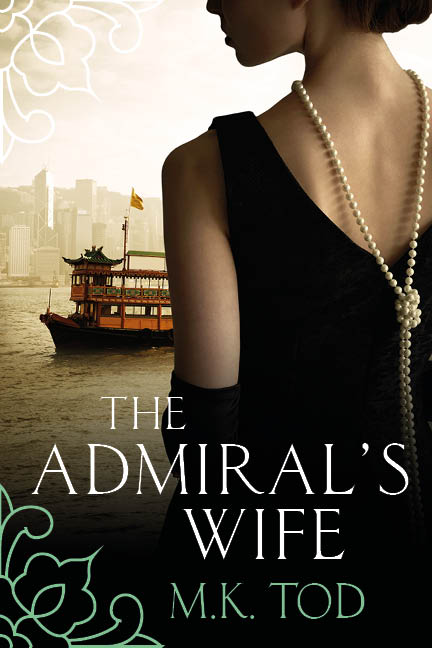
Some of you, dear readers, know that my name is Mary Tod. Some of you know that I plan to self-publish one of my novels in the next few months. Therefore, the question becomes under what name should I publish.

Let me tell you what happens to me whenever I introduce myself to someone in the US. He or she says some variation of “Did you know that Lincoln’s wife was Mary Todd?” Pay attention to two aspects: (1) a very famous person in US history and (2) she clearly spelled her name incorrectly: Mary Todd should be Mary Tod–shouldn’t it?

Let me tell you what happens when you Google my name. (I hasten to add that I rarely do this.) That wonderful search engine assumes I’ve spelled my own name incorrectly and instead finds millions of references to Mary Todd Lincoln, 94 million as of today.

So, what’s a writer to do?

After much deliberation, I’ve decided to write as M.K. Tod. Sharon Kay Penman can get away with Kay as her second name, but Mary K. Tod merely reminds people of cosmetics. And in case you think I should revert to my maiden name, I can’t do that either. My wonderful sister-in-law has taken it over.

So there you have it. M.K. Tod, writer of historical fiction. I rather like it. What do you think?

Brushes & Bayonets by Lucinda Gosling

Tags

, , ,

Brushes & Bayonets by Lucinda GoslingTwitter is a wonderful tool for connecting with people from all walks of life and in all parts of the world. Several weeks ago, I ‘followed’ Luci Gosling and when she followed back I discovered that she’s the author of Brushes & Bayonets: Cartoons, Sketches and Paintings of World War I. Since this book is no longer in print, I purchased a second hand copy and was delighted to peruse its pages as soon as the book arrived.

In the introduction, Ms. Gosling says,

No mainstream newspaper or magazine ever questioned the overall justness of the war, but as the conflict progressed, there were opportunities to gently criticise, poke fun or even incite controversial opinion.

And a little further on she talks about those who created the cartoons, sketches and paintings.

Illustrators from this period can roughly be divided into two camps – those who drew scenes and events from the war, either from eyewitness information or first-hand experience, and those who mixed humour, metaphor or caricature to show a lighter side of the war.

Gosling also mentions a third group called soldier-artist.

The book is organized in sections:

  • Over by Christmas: The Outbreak of War
  • Who’s for the Trench, Are You, My Laddie?: Enlistment, Recruitment & Training
  • Frightfulness: Drawing the Enemy
  • From Plug Street to Regent Street: Life in the Trenches
  • Business as Usual: The Home Front
  • The Blue Pencil: Reporting & Censorship
  • Carrying On: Women & War
  • Back to Blighty: Soldiers on Leave
  • Shoulder to Shoulder: Allies
  • Venus & Mars: Love: Marriage in Wartime
  • Up, Up & Away: Land, Sea & Air
  • The Day: Victory & Peace

Several magazines and illustrated newspapers like The Bystander, The Tatler, The Sphere, The Sketch and The Illustrated London News featured these images. Some make you laugh, others are searingly poignant. A few are shocking. In many, the humanity of regular soldiers shines through.

Lucinda Gosling’s collection serves as a reminder that war is bloody and decisions sometimes senseless. I sincerely hope Osprey Publishing decides to reissue her book for the 100th anniversary of WWI.

Historical Fiction Author – Blythe Gifford

Tags

, , , , , , ,

Blythe Gifford HeadshotI’m very pleased to have Blythe Gifford appearing today. Blythe is known for creating a wonderful balance between history and romance. She has written medieval romances featuring “characters born on the wrong side of the royal blanket” and is writing a series set on the turbulent Scottish Borders of the Tudor era. 

I see that your tagline is ‘On the Borders of Historical Romance’, what made you choose that as your focus?    My Brunson Clan trilogy is set on the Anglo-Scots border during the early Tudor era, so it refers specifically to the Scottish Borders.  But beyond that, the term “borders” refers to two other characteristics of my work.  First, the time periods I choose tend to be outside the current mainstream of historical romance, which is squarely focused on Regency England.  And second, my work tends to be close to the edge where historical romance becomes historical fiction, so it refers to that border as well.

You have written several historical fiction novels and have been successfully published by Harlequin Historicals. What do you think attracts readers to your books?    To paraphrase an old presidential campaign motto, “It’s the romance, stupid.”  By which I mean that first and foremost, my readers want an emotional love story with a happy ending.  That said, my work is grounded in history and virtually all my books have included a real historical personage as a character, which is a little unusual for historical romance.  Despite this, my stories are very much about the people who lived it and their emotions.  As a result, I hope reading one of my books is like living a slice of history, not just reading about it.  I once had a line on my website, “to them, it wasn’t history, it was life.”  I can only guess that my readers enjoy that experience.

Do you have a particular approach to research and writing?    At the beginning of a project, I’ll read generally about the time period, until I find the “hook” that drags me in.  For example, when I was developing the Brunson Clan trilogy, I read broadly about the Reiver era, in general, across the entire 16th century.  Scottish Border Ballads are a great legacy of this area and the story behind one of them, “The Ballad of Johnnie Armstrong,” caught my attention.  It seems there was a Reiver who was enticed to meet with the Scottish King under safe conduct but was hanged, along with his men, when he arrived.  I wanted Johnnie to have a happy ending, so that started me down the path, though I turned the entire story inside out.  Still, there’s a kernel there, a specific historical event, and that has been the case with nearly all my work.

As I get into the story, I’m always searching for the sensory details that will allow me to walk around in that world and experience it.  I have a map and a calendar at hand to keep me grounded, and in some ways, I find images better research than words.  But the physical sensations, scent, touch, sounds, really put me in touch with my characters.  The “everydayness” of real historical life is, of course, the most difficult thing to pin down, particularly before literacy was wide-spread.

As an example, in the second book of the trilogy, CAPTIVE OF THE BORDER LORD, the Brunson daughter goes to court, where she is out of place as a “country bumpkin.”  During the development phase, I participated in an historic dance workshop at the Romance Writers of America National Convention and experienced the types of dances they would have done at court then.  I consider myself a good dancer, but the first time through, I felt incredibly awkward.  That gave me a great insight into how Bessie Brunson would have felt, tripping over her feet before the king.

Have other writers of historical fiction influenced you and, if so, how have they influenced you?    I heard Philip Roth quoted recently as saying “After the first ten years, the influences fall away.”  Since I’ve been writing seriously for more than twenty, it’s a little hard to say what influences are left, but two books come to mind.  The first was not “historical” when it was written, but JANE EYRE was the first book I remember reading that was about “romance.”  It really gripped my junior high school heart.  I have a theory that romance writers are either about Jane Eyre or Jane Austen (apples and oranges, I know!), and I’m all about the Eyre angst.  While the Regency era is the most popular in historical romance, it never drew me and I blame both Charlotte Bronte and Anya Seton for that.

Seton because around that same time, I read Anya Seton’s KATHERINE.  That book more than any other gave me my profession.  It sparked a lifelong interest in fourteenth century England and the impact that love, and the resulting royal bastards, could have on history.  When I started writing romance, I began in the fourteenth century and my first books usually featured royal bastards, real or imaginary, as main characters.  That was a direct result of my love of the subject and time period sparked by that book.

What ingredients do you think make for a favourite historical fiction author? Do you deliberately plan for these ingredients in your writing?    First of all, any author must tell a good story.  The basics of craft (pacing, character, dialog, plot) must be strong.  I’ve seen writers use the novel as an excuse to drape lengthy descriptions of period food, clothes, and politics around a flimsy story.  Or, conversely, they assume readers already know the history and explain too little, so the reader is left confused and, worse, feeling that historical fiction is only for the already educated.  It’s a real challenge to whisk the reader into the story while sprinkling just the right amount of historical detail and context into the mix.  I try to get that right and hope I succeed.

How do you select new stories to tell?    It’s a delicate balance between writing the stories that call to me and still positioning them in the commercial space.  My decision to write the Brunson Clan trilogy is a good example.  I wanted to write a trilogy, because readers love them, and I thought to move from medieval England across the border into Scotland because Scotland is second only to Regency England in popularity.

However, the Scottish Highlands, where most romance is set, called to me not at all.  The Borders, on the other hand, was in the center of the Anglo-Scottish conflict for three hundred years.  It was a good fit for my interests and, as I explained above, I settled on the early 16th century because of the Ballad of Johnnie Armstrong.

Though I was all set to promote my “Scottish” trilogy, when it came time to market the books, my editor tagged them as “Tudor”, so my description became the Scottish Borders of the early Tudor era.  And, not to my surprise, I’ve had several lovely reviews of my “Highlander” books.

But I have story ideas stacked up like planes on the runway.  I hope I have time to get to them all…

What techniques do you employ to write productively?    Do you have some to share?  Let me know!  A few tips I can suggest.  I write at the same time every day.  I don’t wait for the muse to strike.  I set word count goals and have learned to delay revising hard copy until late in the writing process instead of printing and revising daily.  With the Brunson books, the primary research applied to all three books, although I still had new things to learn for each story.  That, and knowing the characters well by book three, allowed me to write those books in six months each, a schedule I hope never to repeat!

Do you think of yourself as having a brand? If so, how would you describe it and how do you reinforce it?    My background is in marketing, so I’ve been very conscious of branding.  This business favors the predictably prolific writer, so I’ve tried to establish the hook of my brand in several books before moving on to something new.  First, I wrote about English royal bastards (literally), both real and imagined.  My last “royal bastard” book was set on the Borders, so to write a Borders trilogy, even though in a different time period, was a natural transition.  Next, while I might have been wiser to stay on the Borders, I’m going back to fourteenth century England and the court of Edward III.

There are other time periods I would like to write, but have postponed in order to establish myself in the reader’s mind.  Ultimately, I think a writer’s voice is her brand.  And there, I’d describe myself as a writer of angsty historicals set in time periods of change and disruption.  There’s a lot of competition, however, and “royal bastards” or “early Tudor Scotland” may be easier for readers to relate to as an introduction.

What do you do to connect with readers?    A website, newsletter, Facebook page, Twitter, Pinterest, Goodreads.  I blog with the Unusual Historicals group and I did extensive guest blogging to promote the trilogy.  But I’m most consistent on Facebook.

What do you know about your readers?    Romance readers as a whole are voracious readers and they read across many genres.  Most are women, yes.  My readers tell me they read in multiple formats – as many in e-book as in print and many read both.  Libraries are still important sources of books for them, too.  I’ve been honored to hear from readers in many countries, since Harlequin has made my work available around the world.  I must admit, I’m still really amazed when I receive a fan note from someone I don’t know personally!

What data do you collect about your readers?    Their email addresses if they will share them.  I occasionally ask questions on Facebook about what/how they are reading, but I don’t have ZIP codes or mailing addresses.

What strategies guide your writing career?    Strategy is too grand a word!  Just a few guidelines.  Don’t chase trends.  Keep showing up at the page.  Stay true to your muse.  Have faith.  Don’t worry about what you can’t control.

What would you do differently if you were starting again?    Two things.  I would have started earlier and I would NOT have spent six years writing my first book.  Such a rookie mistake!  Finish it and move on!

Do you have any advice for writers of historical fiction?    Remember that the book is not about history.  It’s about the character.  The history in the book should only be included to the extent that it touches the character and brings him or her to life.

Is there a question you would like to answer that I haven’t asked?    A final comment, perhaps.  As writers of historical fiction, we face the particular challenge of making our characters authentic yet accessible to the modern reader.  If we were to faithfully present the world view for our time periods, it is likely that the modern reader would not understand, nor sympathize with the characters.  On the other hand, to imbue an historical character with modern attitudes is as grating as anachronistic dialog.  This is a tug-of-war particular to our genre, I think, piled atop the usual authorial angst.  That said, I love the journey of discovery that awaits me with each book.

Thanks for having me.

And thanks for participating, Blythe. I love your down-to-earth views on the business of writing. A few items spoke to me: don’t spend six years on your first novel (wish I’d heard that before the six years spent); the balance of historical accuracy and accessibility to a modern day reader; “story ideas stacked up like planes on a runway” is such a great image which probably resonates for many writers. You’re the first author who has considered the notion of brand – congratulations on that!


Cover_ROTBW_lgBlythe Gifford has been known for medieval romances featuring characters born on the wrong side of the royal blanket. Now, she’s published a Harlequin Historical trilogy set on the turbulent Scottish Borders of the early Tudor era. The books are RETURN OF THE BORDER WARRIOR, November 2012, CAPTIVE OF THE BORDER LORD, January 2013, and TAKEN BY THE BORDER REBEL in March 2013. The Chicago Tribune has called her work “the perfect balance between history and romance.” Visit her at www.blythegifford.com, www.facebook.com/BlytheGifford, www.pinterest.com/BlytheGifford or on Twitter @BlytheGifford. Author photo by Jennifer Girard.


Top Historical Fiction Author – Philippa Carr, Victoria Holt, Jean Plaidy

Tags

, , , , , , ,

Source: Open Road Media

Source: Open Road Media

You probably won’t know her as Eleanor Hibbert, instead you’ll know her as Philippa Carr, Victoria Holt or Jean Plaidy or one of the other pseudonyms she used, including her maiden name Eleanor Burford. As Jean Plaidy, she was selected as one the top 20 favourite historical fiction authors in last year’s survey.

Recently, Open Road Media announced the digital reissuing of Daughters of England series, written under Eleanor Hibbert’s final pen name Philippa Carr. Maggie Crawford, an editor and advisor at Open Road, has graciously provided information about Hibbert’s writing, researching and her very successful career.

How did Eleanor Hibbert begin her writing career? Did it take off immediately or did she experience a difficult start with rejections from agents and publishers?    Eleanor Hibbert started her literary career in the 1930s by emulating her literary heroes—Charles Dickens, George Eliot, and the Brontë sisters. She wrote nine long novels that were psychological studies of contemporary life. Publishers rejected all nine, so she turned to writing stories for London newspapers. It was the literary editor of the Daily Mail who advised Hibbert to forget about “serious fiction” and write something sellable, such as romantic fiction. Unfamiliar with the genre, Hibbert proceeded to read fifty romance novels! Daughter of Anna, her first published novel, came out in 1941 under the name Eleanor Burford, her maiden name. She continued to use this pseudonym into the 1960s as she wrote thirty more contemporary romance novels.

Hibbert loved history, and during the Second World War, when she and her husband were living in Cornwall near a scenic beach named Plaidy, she wrote her first historical novel under the pen name Jean Plaidy. Her first attempt at historical fiction was not a success, but once again she persisted, writing four crime novels under the pen name Elbur Ford, historical-crime novels under the pseudonym Kathleen Kellow, and five historical novels as Ellalice Tate. (The five Tate novels were later republished under the Plaidy pseudonym.) But in 1958, she published the second Jean Plaidy novel, and after that she was unstoppable, writing over one hundred more historical novels about the crowned heads of Europe.

While the Jean Plaidy novels made Hibbert a bestselling author in Great Britain, it wasn’t until 1960 that she became an international bestselling author with her first Gothic romance, Mistress of Mellyn, written under a new pseudonym, Victoria Holt. Readers thought Victoria Holt was a pseudonym for Daphne du Maurier because the novel’s atmosphere was so similar to that of Rebecca. Hibbert had shrewdly studied the market and determined that there was a wide readership for historical romantic suspense stories set in gloomy manor houses. She was right. Victoria Holt proved to be the most financially rewarding of her pseudonyms, and the one for which she was best known in the United States.

In 1972, Hibbert created her last pseudonym, Philippa Carr, returning to the subject she seemed to love best, English history, with her ambitious Daughters of England series. Beginning at the time of the Reformation with The Miracle at St. Bruno’s and ending in the final years of the Second World War with We’ll Meet Again, the series leads readers through the pageant of English history with fast-paced, suspenseful novels that also feature romance and dramatic historical episodes.

How many books did she write in total?    Eleanor Hibbert wrote over 200 novels and sold more than 100 million copies of her novels by the time she died in 1993.

Hibbert was clearly very skilled at writing historical fiction. What ingredients made her so successful?    Born and raised in London, Eleanor Hibbert grew up fascinated with the city and its 2000 years of history. She loved to explore London and she seemed to love to read as much as she loved to write. From the bibliographies in her Plaidy novels, we see that she researched her subjects extensively. She was well read in English and French political and social history as well as in biographies of prominent historical figures. I think she was so skillful at writing historical fiction because she studied a particular historical period and the major players of the time and formed her own opinions of their motivations, which she then conveyed in a realistic, dramatic narrative imbued with the colorful atmosphere of the era. The Jean Plaidy historical novels were popular among readers, yet they also received critical acclaim for their historical accuracy, authentic detail, and quality of writing.

What techniques did Eleanor Hibbert employ to write productively?    Hibbert was a force of nature. She wrote for five hours a day seven days a week, starting at 7:30 A.M. and completing approximately 5,000 words by lunchtime! She enjoyed taking two-month cruises in the winter, but she never left home without her typewriter because she said she felt miserable if she took so much as a week’s break from writing.

Hibbert wrote under different pseudonyms because she wrote different types of fiction for different audiences. Although she was a versatile writer, perhaps she suspected that readers of her Jean Plaidy novels, whose plots rarely strayed beyond historical facts and which were written in third person narration, wouldn’t enjoy her more heavily plotted, romantic, and suspenseful Victoria Holt and Philippa Carr novels, which were written in the more intimate first-person narrative voice. And no doubt her publishers wanted to market her novels to clearly defined audiences. Many of her readers never suspected her multiple identities. 

What strategies guided Hibberts’ writing career?    Persistence, paying attention to the market, writing about what fascinated her—English and European history—and consistently delivering high-quality novels to her legion of fans. I suspect that Eleanor Hibbert would advise writers of historical fiction to write about the period or periods they wish they could have lived in and to understand their characters’ motives. This type of insight enables a writer to make the characters come alive on the page.

Source: Open Road Media

Source: Open Road Media

Why has Open Road Media chosen Hibbert’s Daughters of England series for digital publication?    It is such an outstanding series of historical novels with an irresistible premise. With the Daughters of England novels, a reader can easily absorb the major currents of four hundred years of English history and experience the exciting dramas and conflicts of a significant period through the eyes of a woman of the time, one of the descendants of Damask Farland, the charismatic heroine of The Miracle of St. Bruno’s. The novels simultaneously entertain and educate, offering the reader the authoritative, authentic historical detail of a Jean Plaidy novel coupled with the suspenseful story line and intimate tone of a Victoria Holt novel. No doubt with her great love of history, Eleanor Hibbert was gratified to learn, shortly before her death in 1993, that each of the Daughters of England novels was borrowed approximately 300,000 times a year at British libraries, making Philippa Carr one of the 100 most requested authors.

Many thanks, Maggie Crawford, for providing these interesting insights into Eleanor Hibbert’s life. Like many others, I spent hours curled up with her stories being immersed in time and place as great historical events unfolded. I wish Open Road great success with the digital release of Daughters of England.

Writing Historical Novels About the Irish

Tags

, , , , , ,

Amanda HughesI’m very pleased to have Amanda Hughes guest posting today. According to Amanda, she has been a “Walter Mitty” all her life, spending more time in heroic daydreams than the real world. At last she found an outlet, writing adventures about audacious women in the 18th Century. Her debut novel, Beyond the Cliffs of Kerry was published in 2002, The Pride of the King released in 2011, and her latest historical adventure, The Sword of the Banshee released in February of 2013. Amanda is a graduate of the University of Minnesota and when she isn’t off tilting windmills, she lives and writes in Minnesota.

Writing Historical Novels About the Irish

“A thin place? What do you mean?”

“The ancient Celts believed certain spots on Earth have thin boundaries between the natural and the supernatural world. I believe the monks felt that transparent quality here and for that reason chose this site for a monastery.”

“What a beautiful idea. I’ve never heard of such a thing.”

“Some think its romantic superstition. I prefer to think of it as evidence of eternity.”

~Darcy McBride to Father Etienne from Beyond the Cliffs of Kerry

About twenty years ago when I first read about “thin places” in an article for St. Patrick’s Day, I was moved. Little did I know that years later it would find its way into my debut novel Beyond the Cliffs of Kerry and influence my latest novel, The Sword of the Banshee.

All my life, I have loved all things Irish, but serious investigation into Ireland never occurred to me until I decided to write a novel. Although my mother taught me to be fiercely proud of my Irish heritage, she had no interest or knowledge in Irish history. The English monarchy is what fascinated her, and the study of Great Britain was a priority in school so their past is what I learned. All of my youth, I was under the impression that the Irish had no history at all. History did seem to be “written by the conquerors.”

Years later when I decided to write a book, I came across the short article about “thin places” in a neighborhood newspaper, I became curious. I realized that it was time to do some investigation into my Celtic heritage. It was no easy task in the 1990s. I found little documentation of Irish history and next to nothing about 18th Century Ireland. There was no information at the public library, so I had to order dusty old books from the university. Most of them were sadly outdated, but I persevered and continued to research the novel.

Eventually, I learned that Ireland had suffered many famines, not just the “Great Hunger” of the mid 19th Century, the mass starvation when most of our Irish ancestors came to America and Canada. There had been many more. Instantly I knew that my main character, Darcy McBride, would be the survivor of a devastating famine that swept Ireland in 1740-41.

In my research for Beyond the Cliffs of Kerry, I also discovered that diseases killed most of the Irish at the outset of the famine, long before the slow painful death from starvation. Rickets and anemia were the killers, taking out the elderly and the very young first. Those who managed to survive the disease and the famine were scarred physically and emotionally for life.

Without a doubt, complex and disturbed characters were beginning to evolve for my book. Together they would make up the villagers of Kilkerry, Darcy McBride’s home in County Kerry.

I also learned that smuggling was a way of life in Kerry in the 18th Century. It was a common practice for the residents to smuggle goods to the French as a livelihood. Exposed and convicted of this crime, I decided to have Darcy transported as a prisoner to Colonial America. She would serve her sentence in the colonies as an indentured servant. Early America was another historical obsession for me, so the progression beyond the cliffs of Kerry seemed obvious. Once in the New World, Darcy finds even more danger and bloodshed, but she also uncovers the great love of her life with Jean Michel Lupe.

Beyond the Cliffs of Kerry took shape and was published in 2002. As I began to formulate my next book, I saw a pattern begin to emerge in my storytelling. I seemed to be writing about gutsy women in the 18th Century and I created the byline “Historical Novels with Epic Adventure and Love.”

Though my second novel, The Pride of the King, concerns the adventures of a French woman from New Orleans, Ireland drew me back once more when I started my third book.

This time, it was “The Troubles” that interested me, the turbulent and frequently bloody conflict between Ireland and Great Britain. With my research, I traced the roots of this turmoil back as far as the 13th Century. I learned about “The White Shirt Boys,” an underground society of resistance fighters who challenged the authority of the Crown throughout Ireland. It became clear to me that my next heroine must be a freedom fighter for the Irish living in the 18th Century. India Allen was created.

“The Ice Queen,” as she is called, steps up from the shadows in 18th Century Ireland and spearheads a rebellion that shakes the country, but it is doomed to fail. Fleeing to the New World, she joins forces with a cavalier Irish adventurer who will become her true love, Quinn Calleigh, and together, they form a vast and deadly partisan network during the American Revolution.

Beyond the Cliffs of KerryI was taken with the idea that even though the Irish could not attain their freedom from the British in Ireland, they were victorious here in the New World with the American Revolution. It was here in America where they found their opportunity to prosper, and it was here that they were at last able to worship freely and celebrate their heritage. As a result, The Sword of the Banshee was born.

Today I am formulating the plot line of my fourth book. Even if I do not write about the Irish in my next novel, there is no doubt that the powerful lure of the Celts will draw me back once more. “To be Irish is a proud thing.”

I want to give special thanks to Mary for inviting me to do a guest post on her wonderful blog. For more information about my writing please visit my website: www.amandahughesauthor.com and my blog I Love the Classics at http://www.fortheloveofreadingandwriting.blogspot.com/

Book Giveaway for In His Stead by Judith Sanders

Tags

, ,

In His SteadRecently I interviewed Judith Sanders, author of the novel In His Stead: A Father’s War. Judith has kindly offered a three book giveaway which I am pleased to announce today.

In His Stead, Judith Sanders second novel, follows Thomas Lane’s crusade against the United States Army, its JAG corps, a vengeful officer, the very son he is desperate to save, and his own wife, who has the Solomon-like choice of losing either a husband or a son.

Capturing the essence of family life in wartime–the good, the bad, and the hopeful–In His Stead explores what it means to be a father and a man.

This is my very first giveaway. Please make a comment to be eligible for the draw!